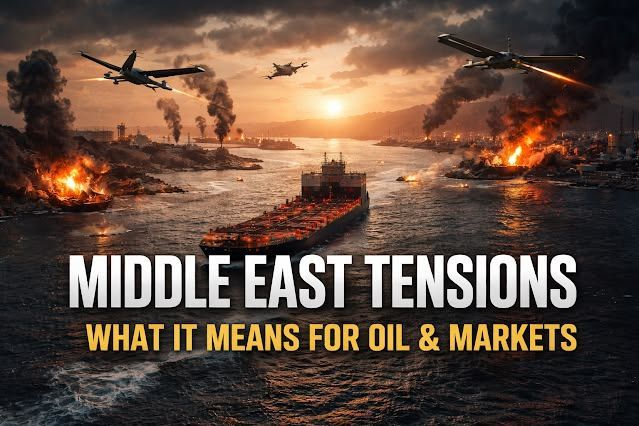
Global oil markets remain highly sensitive to ongoing geopolitical tensions in the Middle East, a region that accounts for a significant portion of the world's energy supply. Recent developments involving regional conflicts, military activities, and concerns over major shipping routes have created uncertainty among investors and energy traders. As a result, crude oil prices have experienced increased volatility throughout 2026. One of the primary concerns is the security of critical maritime routes such as the Strait of Hormuz, through which nearly one-fifth of the world's oil supply passes. Any disruption to these routes could significantly impact global fuel availability and increase transportation costs. Energy-importing nations across Asia and Europe are closely monitoring the situation while strengthening contingency plans to secure supplies. Higher oil prices are already affecting multiple industries, including aviation, logistics, manufacturing, and agriculture. Businesses dependent on transportation are facing increased operational costs, which may eventually be passed on to consumers. Economists warn that prolonged instability could contribute to inflationary pressures in several major economies. Financial markets have also reacted cautiously, with investors shifting funds toward energy stocks and other traditionally defensive sectors. Meanwhile, governments are exploring strategic petroleum reserves and alternative energy investments to reduce dependence on volatile regions. Market analysts believe oil prices will continue to fluctuate based on diplomatic developments, production decisions by oil-exporting nations, and regional security conditions. As global energy demand remains strong, any escalation in tensions could have immediate consequences for fuel prices, international trade, and overall economic growth.
"AI will not replace humans. But humans who use AI will replace those who don't."
Why It Matters
Enterprises and financial institutions are accelerating their adoption of automated intelligence to optimize capital allocation, streamline operation flows, and build resilient market strategies.
The executives who succeed over the next decade are those investing early in data infrastructure, governance, and organizational alignment across all core business units.
Subscribe to Our Weekly Newsletter
Get executive briefings, market analysis, and new article releases straight to your inbox.
Subscribe to The Success World