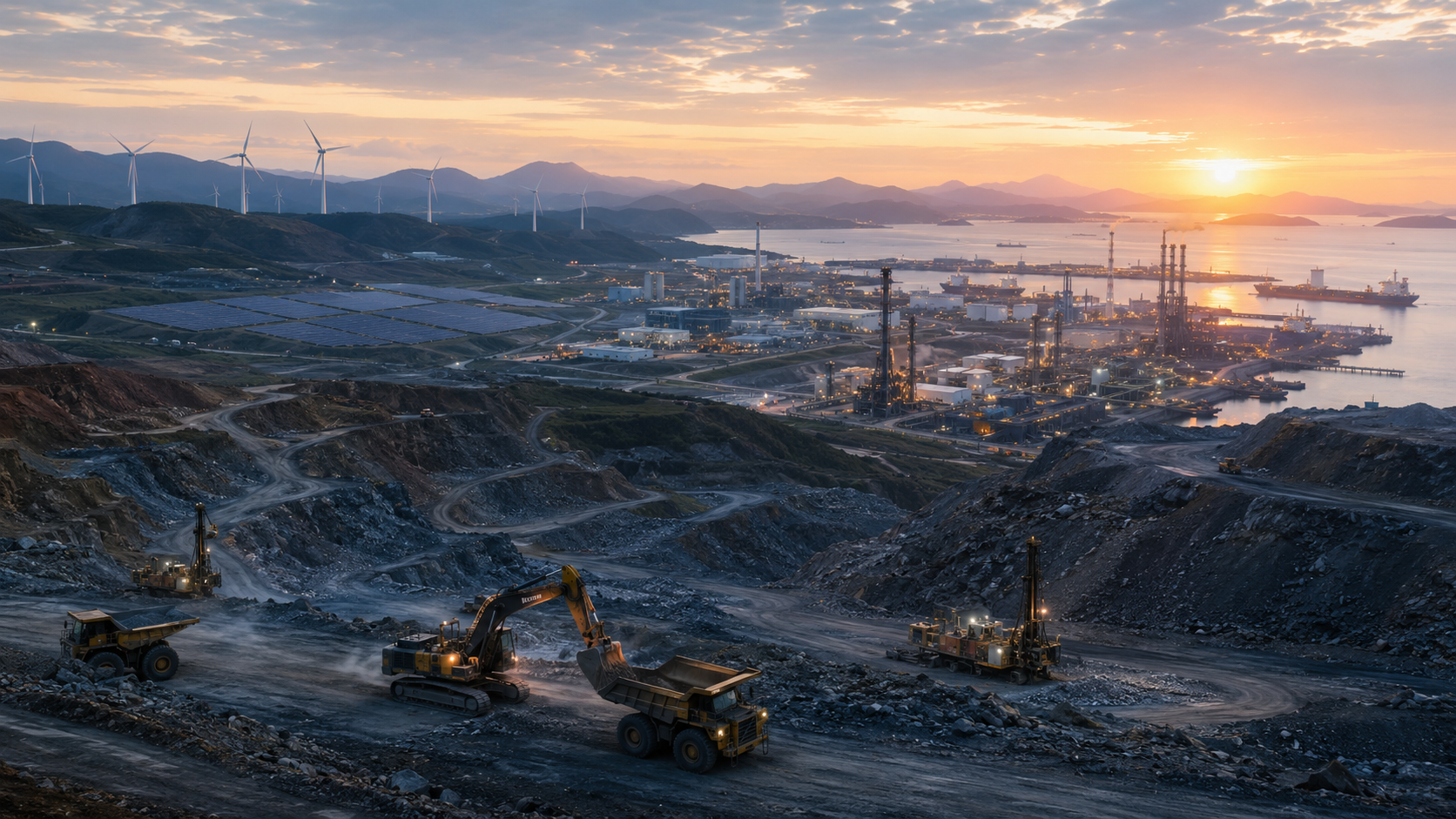
A cycle that could reshape global costs The idea of a “commodity supercycle” tends to return when the global economy feels as though it is shifting gears. Prices of energy, metals, and agricultural goods rise together, then fall together, shaping inflation, trade balances, and industrial strategy across continents. Today, the debate has re-emerged with unusual force. Some investors believe the world has entered a new long-term upswing driven by energy transition and constrained supply. Others argue the recent volatility reflects short-term disruptions rather than a sustained structural shift. The answer matters far beyond trading desks. It influences how governments plan energy policy, how companies design supply chains, and how households experience inflation in everyday goods. Background and context Commodity supercycles are not new. Historically, they have been associated with periods of rapid industrialization or major structural change in the global economy. The post-war reconstruction era, the industrial rise of East Asia, and China’s commodity-intensive growth phase all triggered extended periods of elevated demand for raw materials. These cycles are not defined by steady price increases, but by prolonged periods in which demand growth persistently outpaces supply adjustments. The result is structurally higher prices across a broad basket of commodities rather than isolated spikes. In recent years, commodities have experienced sharp swings. Energy markets were disrupted by geopolitical tensions and supply adjustments. Industrial metals surged on expectations of infrastructure expansion and clean energy demand, then cooled as global growth slowed. Food prices have remained sensitive to climate variability and export restrictions. Against this backdrop, the question is whether these movements are part of a new long-term pattern or simply the residue of overlapping shocks. Main drivers behind the debate At the center of the bullish argument is the energy transition. The shift toward electrification requires large quantities of copper, nickel, lithium, and rare earth elements. Unlike fossil fuels, which are consumed and replaced, clean energy infrastructure requires intensive upfront material investment. This creates a different kind of demand profile—less about recurring consumption, more about large-scale buildout. At the same time, supply expansion in many commodity sectors has become more difficult. Mining projects face longer approval timelines, higher capital costs, and stricter environmental standards. Oil and gas investments have also become more cautious, shaped by policy uncertainty and long-term decarbonization goals. A second driver is geopolitical fragmentation. Trade tensions, export controls, and supply chain diversification have encouraged countries to prioritize resilience over efficiency. This has increased duplication in production networks and, in some cases, raised marginal costs. There is also the legacy influence of China. While its explosive commodity-intensive growth phase has slowed, its economy remains structurally important. Even moderate shifts in its construction, manufacturing, or energy policy can move global markets. On the other side of the debate, skeptics point to cyclical forces. Global growth has been uneven, and in some regions subdued. Technological improvements in extraction and efficiency continue to offset demand pressures. Recycling and substitution are also reducing intensity in certain materials. From this perspective, recent price spikes are better understood as episodic rather than structural. Impact on businesses, markets, governments, and society For businesses, the stakes are immediate. Commodity prices influence input costs across industries from automotive manufacturing to construction and agriculture. When prices are volatile, planning becomes more complex, investment decisions are delayed, and margins become harder to protect. Energy-intensive sectors face particular pressure. Chemicals, steel, and transportation companies must navigate fluctuating cost structures while competing in global markets where pricing power is limited. At the same time, companies involved in mining, refining, and renewable infrastructure may benefit from sustained demand, but only if supply chains remain stable. For financial markets, the debate shapes capital allocation. A belief in a supercycle encourages long-term investment in resource extraction and infrastructure. A belief in cyclical volatility favors shorter-term trading strategies and defensive positioning. Pension funds, sovereign wealth funds, and large asset managers must decide whether to treat commodities as a structural hedge or a tactical exposure. Governments face a different set of challenges. Resource-importing countries worry about inflation and energy security. Resource-exporting nations, meanwhile, must decide how to manage windfalls without overdependence on volatile revenues. Policy choices around taxation, subsidies, and strategic reserves become more consequential in a world of unstable prices. For ordinary households, the effects are indirect but tangible. Commodity prices filter into food bills, fuel costs, housing materials, and transportation expenses. Even when headline inflation stabilizes, underlying volatility in commodities can shape expectations about economic stability and purchasing power. Future outlook The most plausible outcome may not be a clear supercycle or its absence, but a more fragmented commodity environment. Different sectors may follow different trajectories. Metals tied to electrification could remain structurally supported, while traditional energy markets adjust more gradually to demand shifts. Agricultural commodities may continue to be driven by climate variability and policy intervention rather than long-term demand trends alone. What distinguishes the current period from past cycles is the number of simultaneous structural forces at work. Decarbonization, geopolitical realignment, and technological change are interacting in ways that are difficult to separate. This makes forecasting more uncertain and increases the importance of adaptability over prediction. Volatility, rather than direction, may be the defining feature of the coming years. Bigger Picture The supercycle debate ultimately reflects a deeper question about how the global economy is reorganizing itself. Commodities sit at the foundation of modern life. They are not just traded assets but physical inputs into energy systems, food security, infrastructure, and industrial production. Whether or not a true supercycle is underway, the world is entering a period in which access to raw materials is becoming more strategically important. The balance between supply constraints and demand transformation will shape not only markets, but also the pace and cost of global development. In that sense, the debate is less about predicting a single trajectory and more about understanding a more complex, less predictable global resource system. Banner Image Direction (16:9) A cinematic, realistic aerial composition of a global commodities landscape at dawn. In the foreground, an active copper or open-pit mine with earthmoving machinery appears grounded and industrial, while in the midground a sprawling oil refinery and port infrastructure extend toward the horizon. In the distance, wind turbines and solar farms are visible, subtly integrated into the landscape to represent energy transition. The scene should feel interconnected rather than fragmented, showing the overlap of old and new energy systems. Lighting is natural and soft, with early morning haze creating depth and realism. Color palette: slate grey, deep blue, and muted industrial steel tones with warm hints of sunrise amber. The tone is sober, editorial, and grounded, resembling a Financial Times or Reuters magazine cover. No futuristic UI, no text, no logos, and no stylized digital effects. The emphasis is on realism, scale, and the tension between extraction, industry, and transition.
"AI will not replace humans. But humans who use AI will replace those who don't."
Why It Matters
Enterprises and financial institutions are accelerating their adoption of automated intelligence to optimize capital allocation, streamline operation flows, and build resilient market strategies.
The executives who succeed over the next decade are those investing early in data infrastructure, governance, and organizational alignment across all core business units.
Subscribe to Our Weekly Newsletter
Get executive briefings, market analysis, and new article releases straight to your inbox.
Subscribe to The Success World